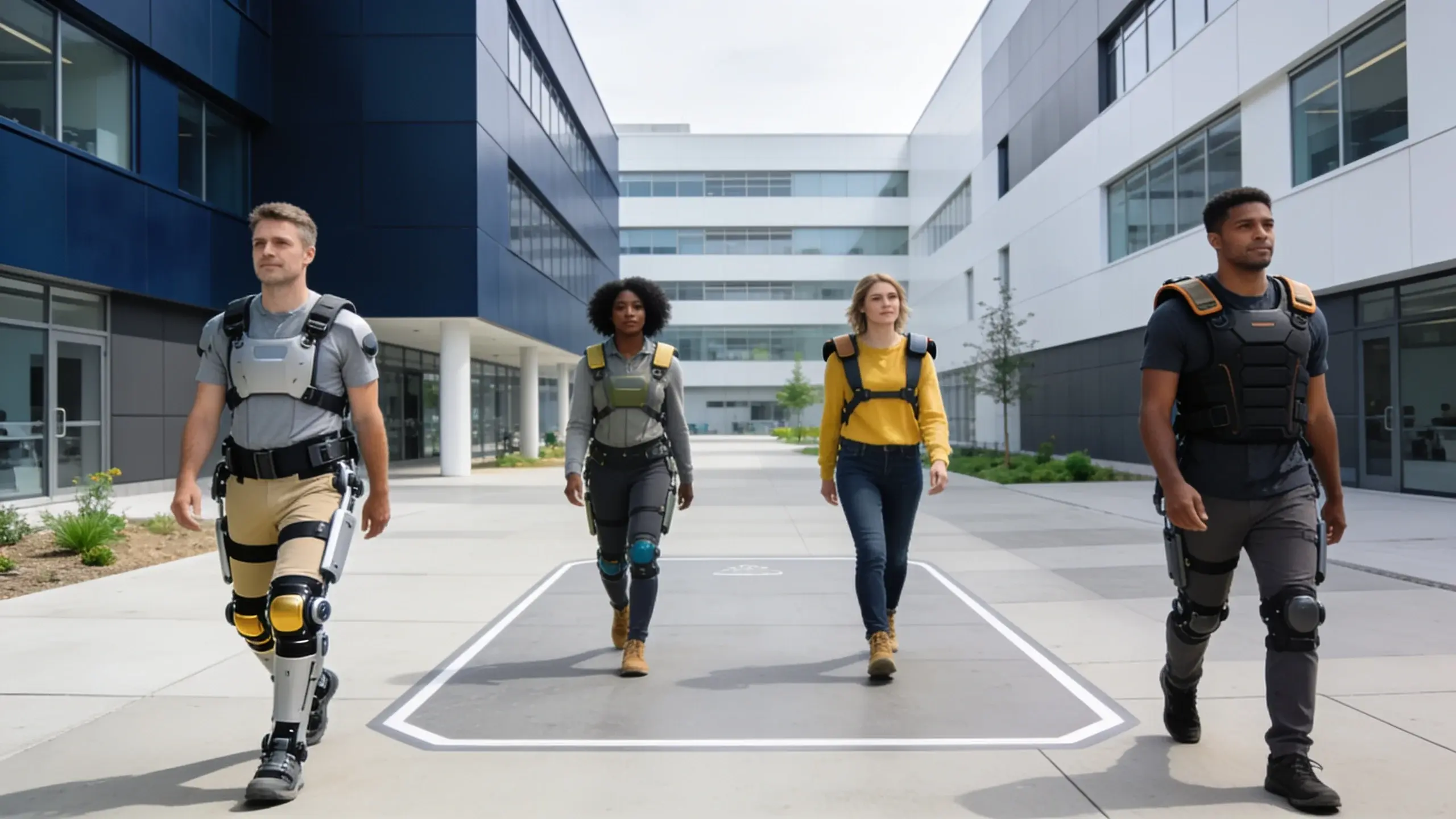
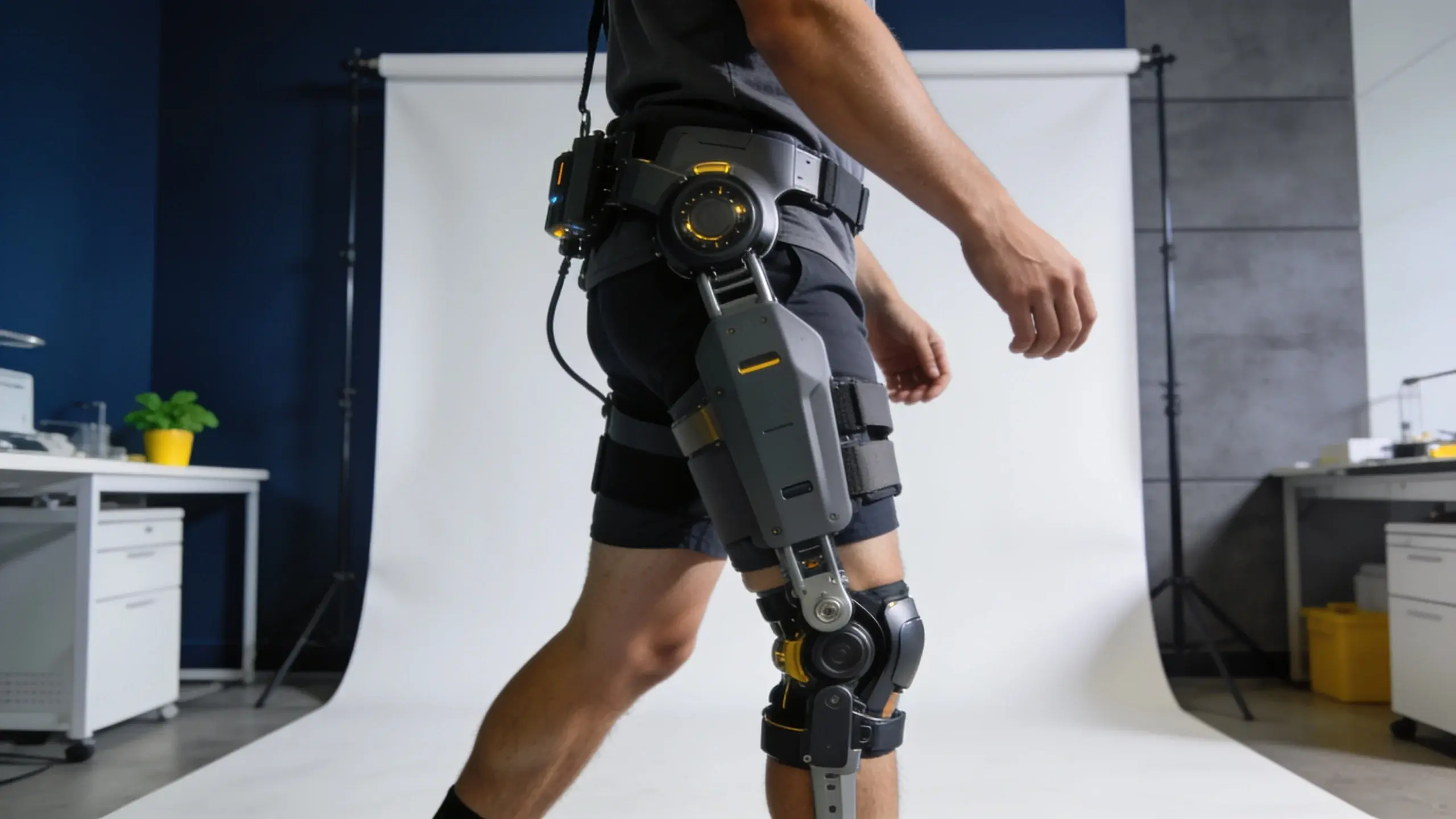
Powered vs Passive Exoskeletons
A decision comparison covering actuation, mass, controls, maintenance, task fit and evidence rather than marketing labels.

Research standard: this guide draws on primary records, technical documentation and documented field experience. Volatile facts such as price, availability and firmware are reviewed on a dated schedule.
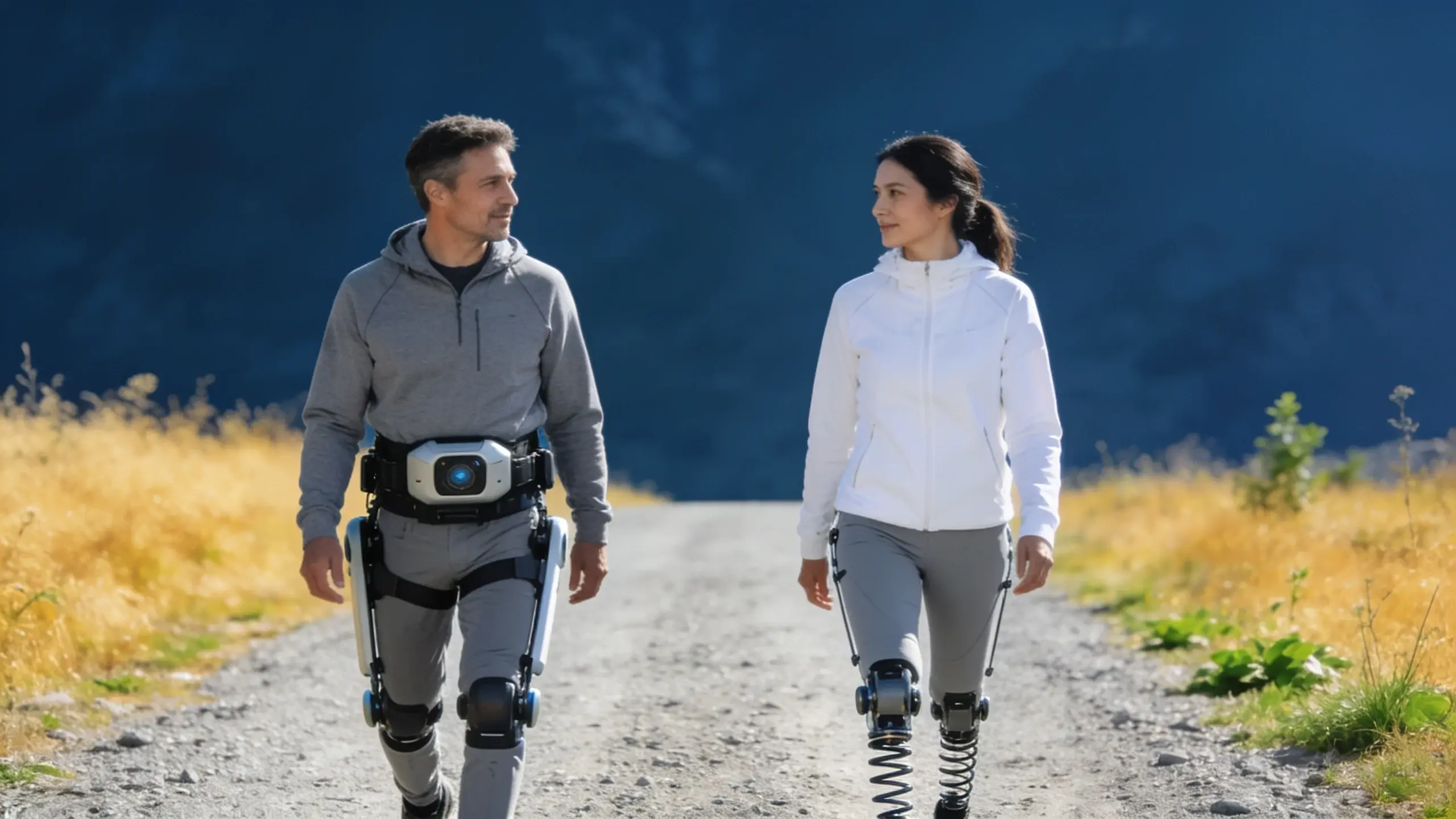
Side-by-side comparison
| Criterion | Powered | Passive |
|---|---|---|
| Assistance source | Motor, pneumatic or other actuator | Spring, elastic, damper, counterbalance or leverage |
| Control | Sensors, modes and firmware | Mechanical tuning and body movement |
| Power logistics | Battery, charging and shutdown behavior | No traction battery required |
| Mass and complexity | Typically more electronics and moving parts | Often simpler, but not necessarily light |
| Adjustment | May change assistance dynamically | Usually task- or posture-specific |
| Failure questions | Power, sensor, software and actuator behavior | Wear, spring forces, alignment and mechanical damage |
The distinction is about where assistance energy comes from
A powered system can inject mechanical energy through an actuator. Sensors and control software decide when and how much assistance to command, while a battery or another energy source supplies the actuator. A passive system cannot add net energy in the same way. It stores energy, redirects an existing load, counters gravity or resists a motion through springs, elastic elements, dampers, clutches or leverage.
That definition is more reliable than appearance. A lightweight textile exosuit can be powered through remote or body-worn motors, while a rigid frame can be entirely passive. Hybrid designs may combine powered actuation with springs or compliant elements, so a useful product record describes each assistance path instead of forcing the whole device into a single label.
Original energy-path map
Where powered and passive assistance begins
Both categories can apply force through a wearable interface. Before that point, their paths differ. A powered actuator receives external energy. A passive mechanism stores, returns or redirects energy from movement or the task.
Powered path
External energy enters through an actuator
- 1External energyBattery, electricity, pneumatic pressure or hydraulic pressure
- 2ActuatorMotor or another powered force or torque source
- 3TransmissionLinks, cables, gears or other force-transfer elements
- 4Body interfaceCuffs, straps, shells or textile anchors
In a typical powered system, sensor signals and software command the actuator. Battery capacity and operating conditions belong in a separate endurance record.
Passive path
Movement loads a mechanical element
- 1Wearer motion or task loadMovement, gravity or an applied external load
- 2Passive mechanismSpring, elastic element, damper, clutch or counterbalance
- 3Force pathStructural links, straps, textiles or leverage
- 4Body interfaceContact points that transfer the redirected force
One 2015 ankle study shows this path in a specific device: ankle movement stretched and relaxed a spring while a clutch held it during part of the gait cycle. See the concise passive-exoskeleton definition before comparing a mechanism.
Where powered systems gain flexibility — and complexity
A controller can vary assistance across gait phases, terrain modes or user-selected settings. That adaptability is valuable when the target movement changes, but it introduces new dependencies: sensor placement, calibration, timing, firmware, actuator response, battery state and the behavior of the device when assistance changes or stops.
- Confirm what signal triggers assistance and whether the device distinguishes walking, stairs, slopes or standing.
- Check whether published output is peak or continuous, per joint or system-wide, and measured at the motor or body interface.
- Document low-charge, shutdown and manual-release behavior rather than assuming the frame becomes mechanically transparent.
- Treat app features, firmware support, chargers and replacement batteries as part of ownership, not optional extras.
Where passive systems gain simplicity — and specificity
Passive designs avoid traction batteries, powered actuators and motion-control software. That can reduce charging logistics and electronic failure points. The trade-off is that assistance usually follows the mechanics of a spring, elastic path, counterbalance or clutch. A system tuned for one posture or movement may resist another movement or transfer force to a different contact area.
Passive does not mean effortless, weightless or maintenance-free. Preload, stiffness, lever arms and anchor locations determine when force appears and where it goes. Straps, textiles, hinges, fasteners and elastic elements still wear. Occupational programs must also check whether reduced demand in one muscle group is accompanied by pressure, restricted movement or load transfer elsewhere.
Why task fit matters more than the label
A passive shoulder device for sustained overhead work and a powered hip device for hiking are not alternatives simply because both are wearable. The movement, environment, duration and load path need to match before price or convenience can be compared.
| Decision situation | Powered may fit when | Passive may fit when |
|---|---|---|
| Variable walking or outdoor movement | Assistance needs to adapt across pace, grade or mode | A narrowly defined mechanical action is sufficient and compatible with the route |
| Repeated workplace posture | The task changes enough to justify sensing and active control | A stable task allows a spring or counterbalance to support the same motion repeatedly |
| Long shifts or travel | Charging, spare batteries and service are practical | Avoiding charging is more valuable than dynamic assistance |
| Maintenance capacity | The owner can support batteries, firmware and powered components | The owner can inspect and replace mechanical and textile wear parts |
| Evidence review | Controller, output and shutdown behavior are documented | Force path, stiffness, preload and task-transfer effects are documented |
How to compare evidence without creating a false winner
Powered and passive studies often use different hardware, participants, movements and baselines. A powered prototype may be compared with itself in an unpowered mode; a passive device may be compared with no device. Those baselines answer different questions. Results should remain attached to the exact device, task, speed, assistance setting and comparison condition.
For product decisions, ExoRank first matches intended use and assisted joint. It then compares interface, total worn configuration, control or mechanical tuning, endurance or deployment logistics, maintenance and evidence quality. Category membership is a filter. It is not a score and does not make one architecture inherently superior.
Ownership differences
Powered systems introduce chargers, batteries, firmware and app compatibility. Passive systems may be easier to store and deploy, but their contact points, elastic elements and mechanical adjustment still require inspection and care. Both need sizing and training appropriate to the task.
A pre-comparison checklist
- Match the exact intended use, body region and movement before comparing specifications.
- Trace the force path and every body interface for both systems.
- For powered devices, record sensors, modes, output basis, battery bundle and shutdown behavior.
- For passive devices, record spring or elastic behavior, preload, adjustment range and when resistance appears.
- Keep manufacturer claims separate from study outcomes and field observations.
- Compare deployment, training, inspection, service and replacement parts over the expected ownership period.
Sources
- ASTM F3323-24: Standard Terminology for Exoskeletons and Exosuits
- ASTM Committee F48 on Exoskeletons and Exosuits
- ASTM F48.02 human factors and ergonomics standards
- NIOSH: Industrial Exoskeletons
- Nature: unpowered clutch-and-spring ankle exoskeleton (2015)
- Science Robotics: powered and unpowered ankle assistance during running (2020)
Key facts
- Passive does not mean no force; it means no powered actuator.
- Powered systems add software and low-charge behavior to the evaluation.
- Both categories can shift load to other contact points or body regions.
- Compare like tasks and assisted joints, not category labels alone.
Frequently asked questions
Are passive exoskeletons safer?
Not automatically. They avoid battery and software risks but still transmit force, affect movement and can create fit or task-transfer problems.
Do passive exoskeletons need maintenance?
Yes. Straps, fasteners, springs, textiles and structural parts can wear or require inspection according to the manufacturer.
Which type is better for hiking?
Current direct-to-consumer hiking products are commonly powered hip-assist systems, but suitability still depends on route, fit, controls and support.