How Do Powered Exoskeletons Work?
A plain-language explanation of sensing, intent estimation, control, actuation, fit and failure behavior in wearable robotic systems.

Research standard: this guide draws on primary records, technical documentation and documented field experience. Volatile facts such as price, availability and firmware are reviewed on a dated schedule.
The control loop in six parts
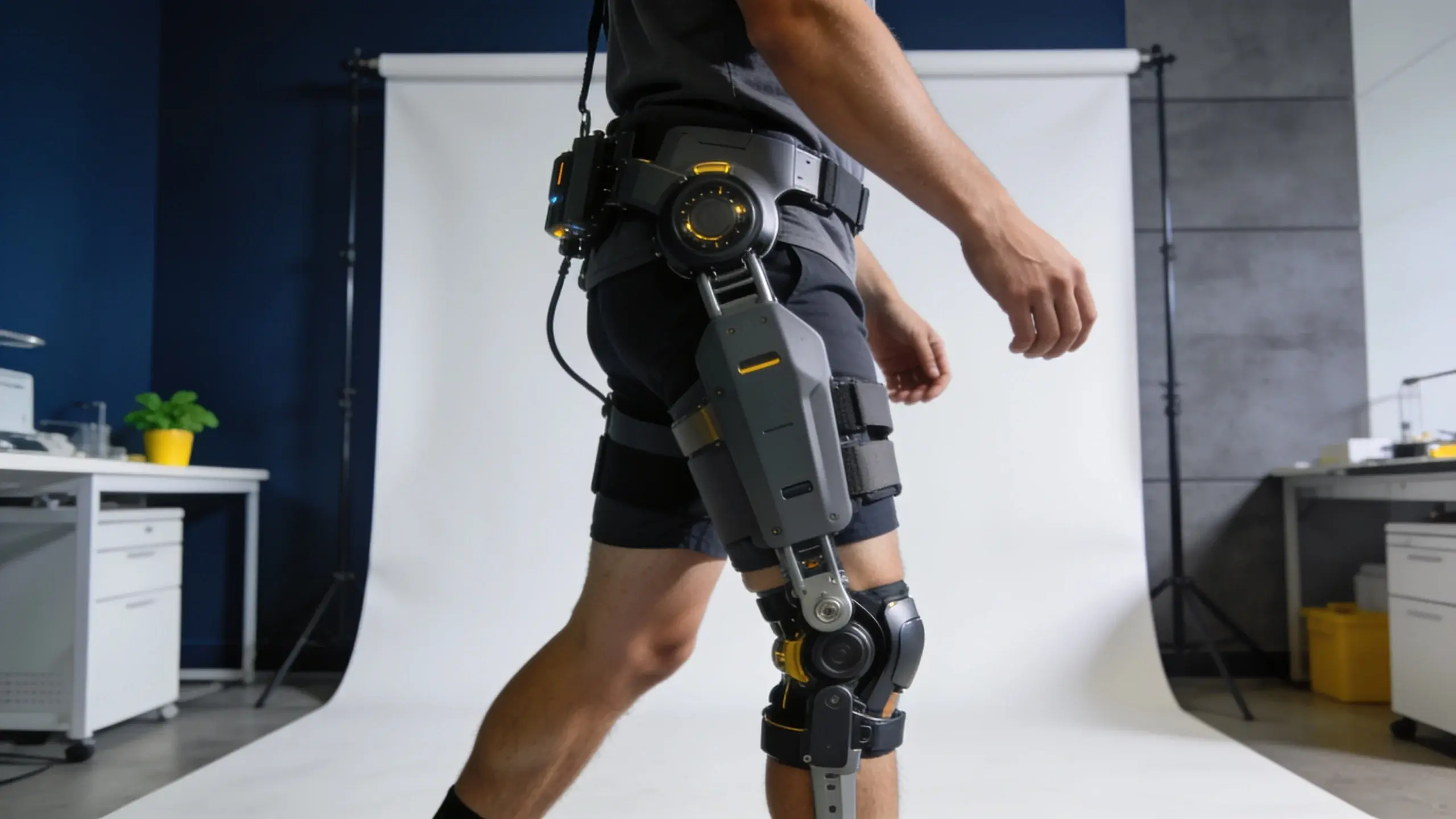
| Stage | What it does | Question to ask |
|---|---|---|
| Sense | Measures motion, orientation, pressure or other signals | Which sensors are present on this model? |
| Estimate | Infers gait phase, direction or intended mode | What movements can it reliably recognize? |
| Control | Calculates when and how much assistance to request | Can behavior be adjusted without a phone? |
| Actuate | A motor or other actuator creates force or torque | At which joint and in which direction? |
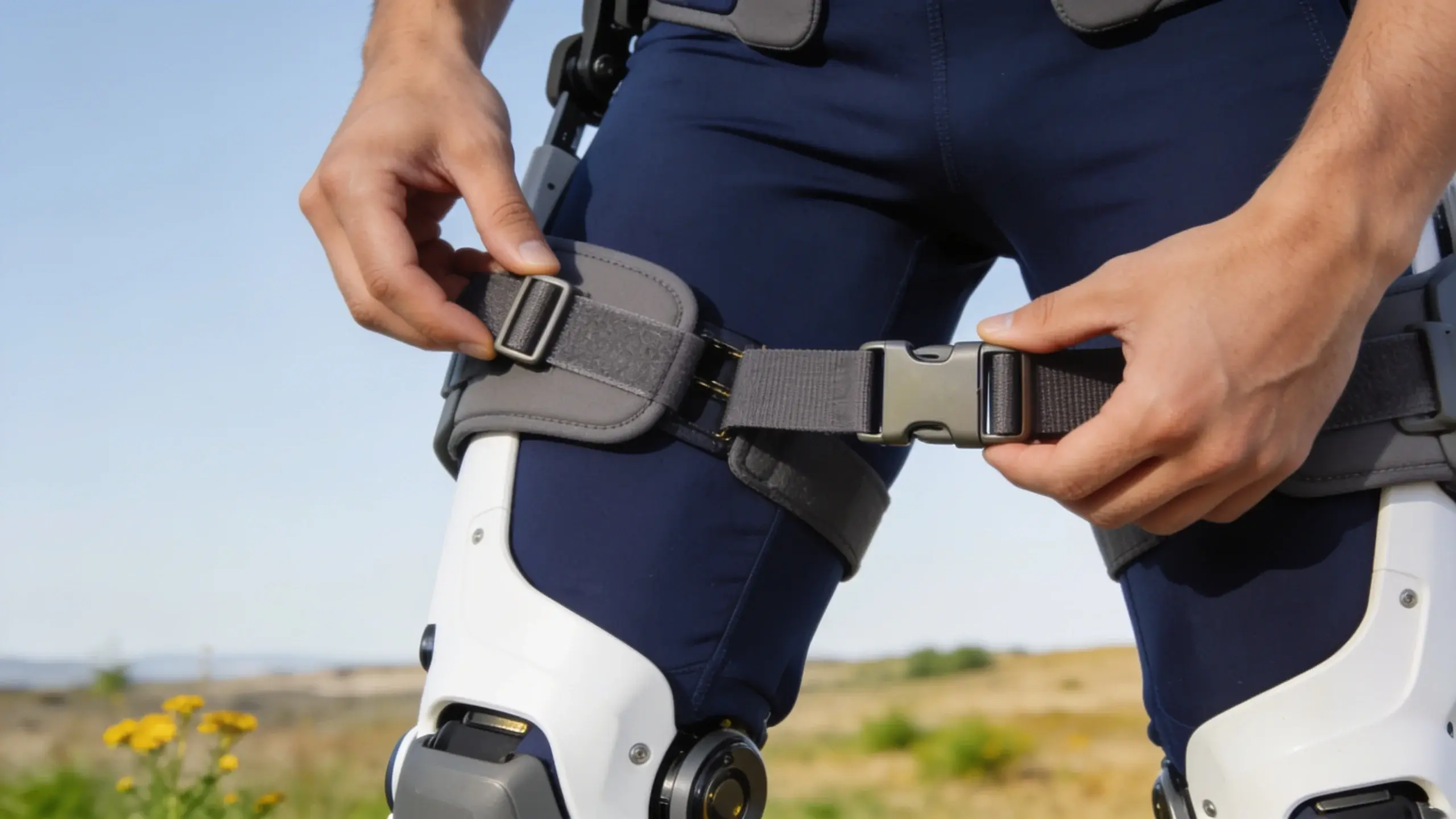
| Transmit | Links and straps transfer assistance to the wearer | How sensitive is it to alignment and fit? |
| Power | The battery and electronics sustain the loop | What happens at low charge or shutdown? |
Sensors and intent estimation
Consumer systems commonly infer gait from combinations of motion and position signals. Marketing may call this AI, but the useful buyer questions are narrower: which movement modes are supported, how quickly the system reacts, and whether mode availability depends on a particular firmware or app version.
Actuators, torque and the human interface
Motor output alone does not tell you how a device will feel. The frame geometry, assisted joint, leverage, control timing and contact points determine how much of that output reaches the intended movement. A lighter or lower-powered model can be the better fit if it aligns more naturally with a specific user and task.
What happens when the system is off?
A serious evaluation asks whether the device becomes passive, adds drag, limits movement or requires a particular shutdown procedure. This behavior must come from the exact manual or a documented test; ExoRank does not infer it from a different model in the same family.
Why field experience still matters
Manuals establish intended use and limits. Independent field observations can reveal fit sensitivity, noise, control transitions and terrain-specific behavior. Neither source replaces the other, and an isolated creator impression is not a quantified performance test.
Sources
Key facts
- Sensors do not read thoughts; they infer movement from measurable signals.
- Control software and firmware can change behavior without changing the frame.
- Assistance has to arrive at the right joint and time to feel useful.
- A safe comparison includes what happens when power or sensing is interrupted.
Frequently asked questions
Do powered exoskeletons use AI?
Some manufacturers describe their control systems as AI. ExoRank records the exact manufacturer language and focuses on observable functions rather than treating AI as a uniform technical category.
Can an exoskeleton walk for you?
Consumer assistance devices do not remove the need for balance, foot placement and user effort. Medical powered exoskeletons are a separate regulated category with specific indications and training requirements.
What makes assistance feel natural?
Timing, joint alignment, frame geometry, fit and movement pattern all matter. Rated power by itself is not enough to predict comfort or usefulness.