Exoskeleton Manufacturers: A Structured Market Map
A sourced map of the exoskeleton company landscape, organized by intended use and built to prevent unlike products from being compared as peers.

Research standard: this guide draws on primary records, technical documentation and documented field experience. Volatile facts such as price, availability and firmware are reviewed on a dated schedule.

The exoskeleton manufacturer landscape at a glance
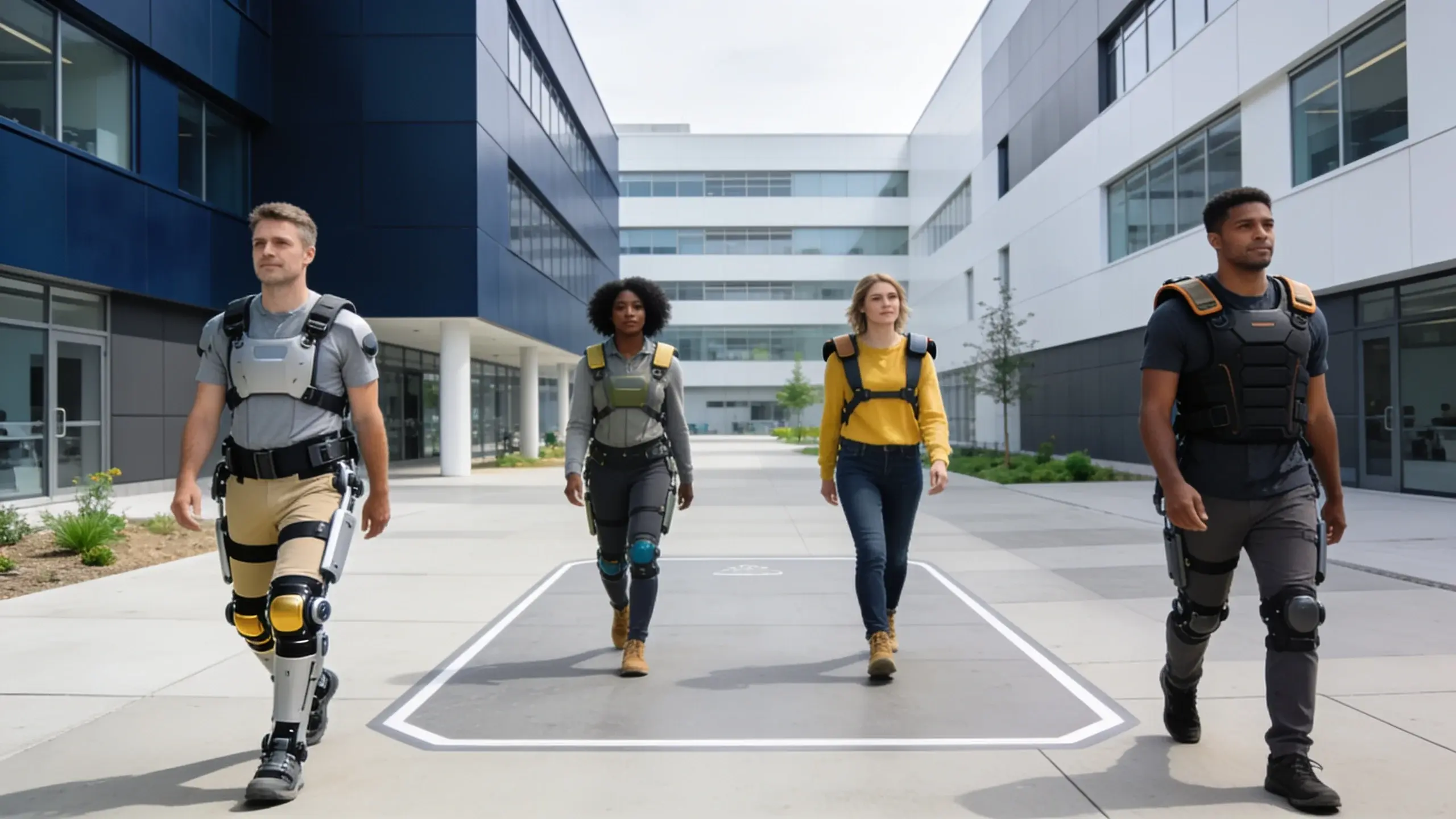
The phrase exoskeleton company can describe very different businesses. One may design a compact powered frame for outdoor walking, another a passive shoulder support for a defined work task, and another a lower-limb system used through a clinical pathway. Those products may share sensors, straps or mechanical links, but they do not answer the same user question and should not be placed in one undifferentiated list.
ASTM Committee F48 reflects that breadth. Its scope spans consumer, industrial, medical, military and emergency-response applications, as well as active and passive systems. That is a useful starting point for mapping companies: classify the intended use first, then examine the mechanism, body region and evidence for the exact product. A company name alone tells you very little about fit or suitability.
| Company group | Examples in this map | What the label establishes | What still needs verification |
|---|---|---|---|
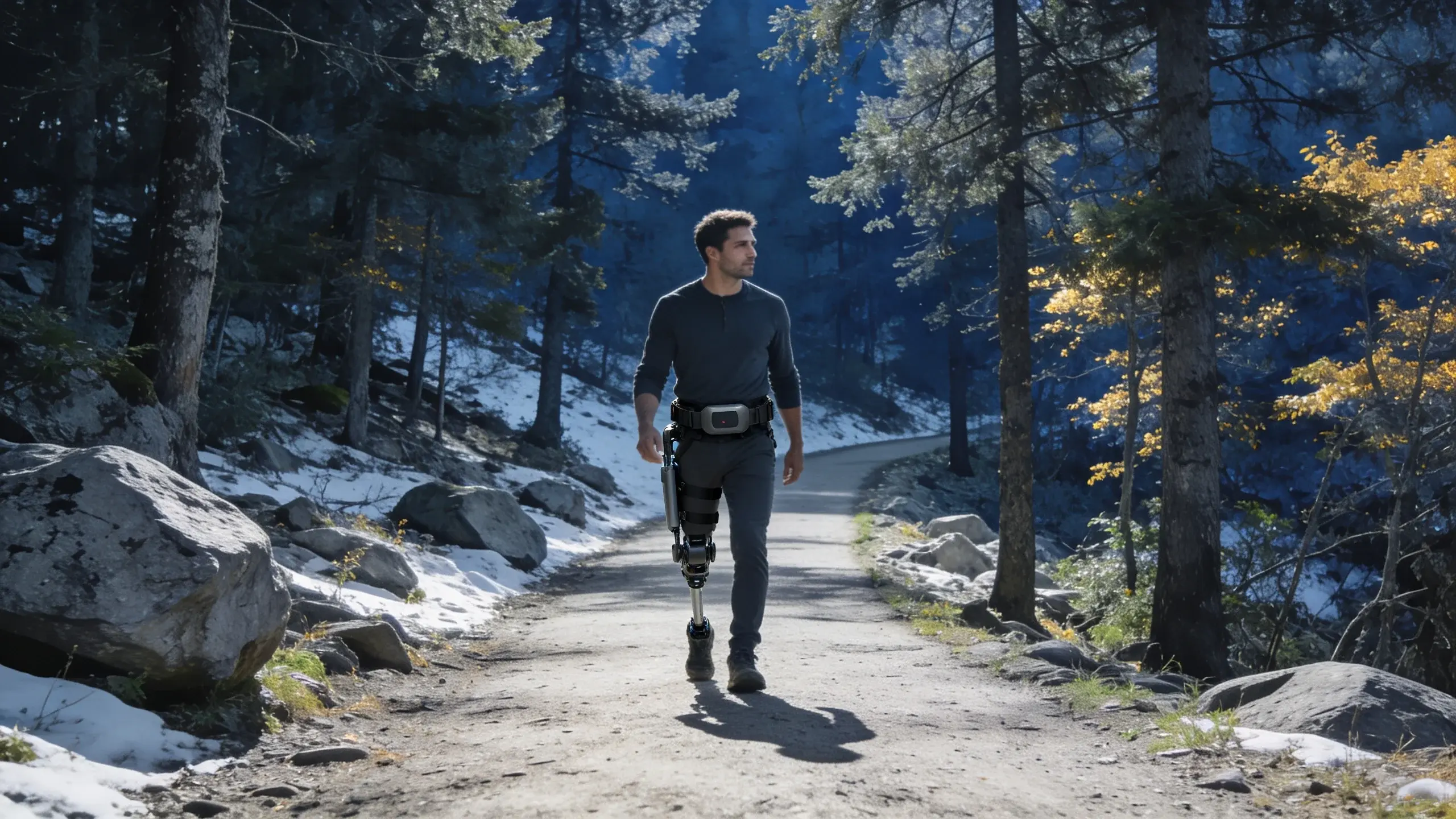
| Consumer / recreational | Hypershell; DNSYS | The official site presents wearable systems for outdoor or everyday movement | Exact model, assisted joint, instructions, market and dated support terms |
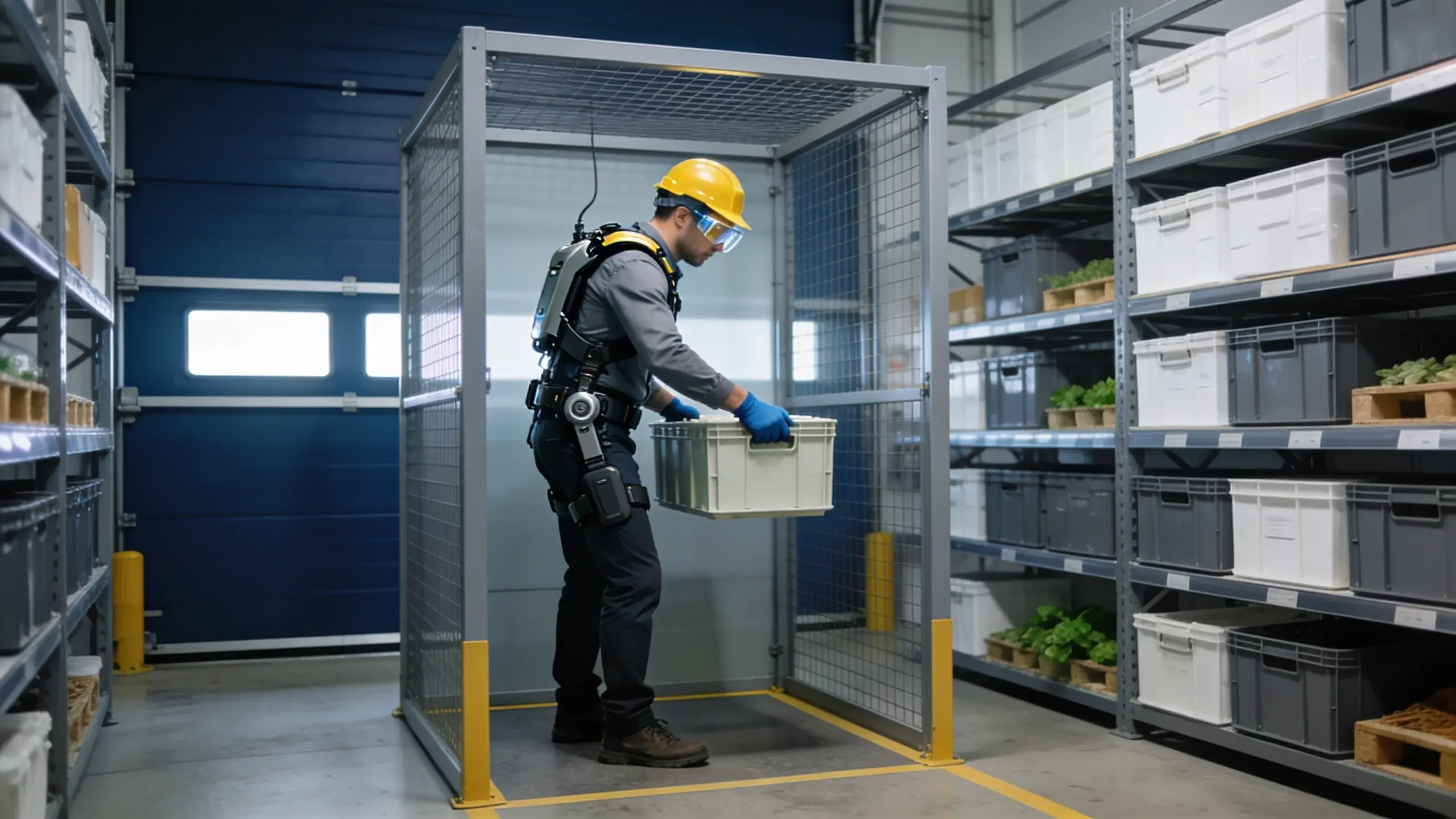
| Workplace / occupational | German Bionic; Auxivo | The official portfolio is organized around work tasks or worker support | Task match, local implementation, training and independent evidence |
| Medical / rehabilitation | Ekso Bionics; Lifeward | The official portfolio includes named clinical or personal-use exoskeleton systems | Exact indication, regulator record, professional pathway and jurisdiction |
| Research / prototype | Universities, laboratories and pre-commercial teams | A system may demonstrate an architecture or study question | Commercial status, repeatable evidence and whether a supported product exists |
Consumer and outdoor exoskeleton companies
Hypershell
Hypershell's official company page describes a business founded in 2021 around intelligent wearable systems and records the Hypershell X family in its public timeline. The useful classification signal is not its promotional language about capability; it is the company's stated consumer and outdoor orientation. A buyer still has to move from the brand page to the exact model page and instructions. Family names, launch milestones and lifestyle imagery do not establish that every version has the same frame, controls, included equipment or operating limits.
DNSYS
DNSYS currently presents two distinct product families on its official site: X1 pages centered on a hip-area wearable system and Z1 pages centered on a knee-joint system. That distinction illustrates why a manufacturer list should preserve architecture. Two products from the same company can interact with different joints and movements, so brand reputation cannot make them interchangeable. The official site is appropriate evidence for current portfolio identity and manufacturer wording, while performance conclusions require exact-model documentation and stronger comparative evidence.
These two companies are examples, not a complete census or a recommendation. A consumer brand belongs in this group only when its own current materials clearly identify a recreational or general-consumer use. A prototype announcement, crowdfunding concept or distributor listing is not enough to establish a durable manufacturer record. ExoRank also separates the company that designs a system from a storefront that merely resells it.
Workplace exoskeleton companies
German Bionic
German Bionic identifies itself as a European robotics firm specializing in smart power suits and wearable technologies for workplaces. That makes it a workplace-focused manufacturer for this map. Statements on the company page about health, injury, posture or workflow remain manufacturer claims and are not converted here into proven outcomes. Evaluating one of its systems requires a separate task-specific process: identify the exact product, the movement being supported, the environment, the implementation requirements and the independent evidence that matches that use.
Auxivo
Auxivo says it was founded in 2019 as a spin-off from ETH Zurich and presents wearable exoskeleton products for physically demanding work. Its public portfolio illustrates another important split: a company can offer several mechanisms and body-region targets under one name. The manufacturer overview can establish who makes the products and how it categorizes them, but it cannot establish a universal workplace benefit. Each system must be assessed against the actual task rather than the broad category of physical work.
Workplace products are shown here only to explain market structure. This page does not advise deployment and does not evaluate injury prevention, productivity, ergonomics compliance or worker suitability. Those are higher-risk questions that require task data, qualified review and current primary records. Readers researching that segment should use the dedicated industrial guide as context and treat a manufacturer demonstration as a starting point, not a complete assessment.
Medical and rehabilitation exoskeleton companies
Ekso Bionics
Ekso Bionics maintains an official portfolio organized around rehabilitation and personal-use exoskeleton systems. For a company map, that is enough to place the business in the medical and rehabilitation segment. It is not enough to summarize who can use a device, what outcome to expect or what regulatory status applies. Those statements must be checked against the exact model, regulator record, labeled use and current professional guidance in the relevant jurisdiction.
Lifeward
Lifeward's official site lists the ReWalk Personal Exoskeleton and ReStore Exo-Suit within a broader rehabilitation portfolio. The company name also demonstrates why historical brand knowledge can be misleading: readers may still encounter the earlier ReWalk Robotics identity, while the current corporate site uses Lifeward. Entity research should therefore record current company identity, the product brand and the exact product separately rather than assuming they are the same field.
Medical and rehabilitation companies are included so the market map does not incorrectly portray consumer devices as the whole category. Their products are not compared with recreational systems, and this guide makes no claim about treatment, mobility outcome, access or coverage. Anyone researching a medical use should leave this general company map and follow an exact-device, clinician-led and regulator-backed pathway.
What we verified and what remains outside this map
For each named company, ExoRank opened a current official company or product overview and verified only the narrow facts needed for classification: the organization presents exoskeleton or exosuit products, and its public portfolio signals a primary intended-use segment. The source list below records the pages checked on July 21, 2026. ASTM provides the cross-market framework rather than evidence for any individual manufacturer.
| Verified for this guide | Not established by this guide |
|---|---|
| Current company or brand identity on the cited official site | That a company is the market leader or preferable to another |
| The broad segment represented by the official portfolio | Safety, clinical benefit, injury prevention or productivity |
| Named product families where visible on the cited overview | Current price, stock, shipping, warranty or seller authorization |
| Whether products span different joints or intended uses | Certification or regulatory status for any exact model |
| The evidence questions needed before comparison | Measured comparative performance, long-term durability or user-specific fit |
The list is intentionally selective. It is not a database of every startup, distributor, research laboratory, defense contractor or discontinued project. Inclusion means a company offers a useful example of a clearly identifiable market segment with a current primary source. It does not confer an award, endorsement or commercial eligibility. Omission does not imply that a company lacks a product or evidence; it may simply fall outside this guide's evidence threshold or scope.
Manufacturer, brand, developer and distributor are different roles
Exoskeleton pages often use company and brand as if they were synonyms. A legal manufacturer may design and place the product on the market; a brand may be the name buyers recognize; a developer may own part of the technology; and a distributor may handle sales or local service. Acquisitions, licensing and regional partnerships can separate those roles further. A reliable record should capture the role supported by the source instead of assigning manufacturer status from a logo on a storefront.
This distinction becomes important when support or documentation is needed. The brand homepage may describe a product family, while the manual names a different legal entity and the local seller has separate terms. Product identity should therefore include the exact model and generation, official documentation publisher, legal manufacturer when stated, authorized market path and verification date. If those records conflict, the conflict belongs in the evidence ledger rather than being silently resolved.
How to evaluate an exoskeleton manufacturer
Start with evidence completeness, not a dramatic demonstration. A credible company comparison asks whether the manufacturer makes its exact products and intended uses legible. It also checks whether claims stay consistent across the product page, manual, support material and independent records. The goal is not to reward the longest specification sheet; it is to understand what can actually be verified.
| Evaluation layer | Questions to ask | Best starting record |
|---|---|---|
| Entity | Who designs, manufactures, brands and supports the exact product? | Official company page, manual and legal notice |
| Product identity | What are the exact model, generation, body region and mechanism? | Model page and dated manual |
| Intended use | Is the system consumer, workplace, medical or research? | Official intended-use statement and instructions |
| Evidence | Which statements are specifications, measured results or user reports? | Primary documentation plus method-visible independent work |
| Market path | Which official channel serves the relevant country and user type? | Dated official regional source |
| Support | Are training, service, parts and updates documented for the exact model? | Support portal and model-specific documentation |
| Change control | Can a buyer distinguish generations, firmware and revised claims? | Release notes, document revisions and archived records |
A company may be strong in one layer and incomplete in another. Clear product identity does not prove field performance; extensive research does not prove that a current commercial model is supported in every market. Similarly, a familiar brand name does not eliminate the need to check the exact generation. The most useful manufacturer profile exposes those boundaries instead of collapsing them into a single reputation score.
Common warning signs in manufacturer research
- The page calls a company a manufacturer but links only to a retailer, marketplace or campaign page.
- Several models are discussed under one family name without identifying which specification belongs to which version.
- A prototype, pilot or research paper is presented as proof of a supported commercial product.
- Manufacturer claims are rewritten as independent facts without attribution or test conditions.
- Consumer, workplace and medical systems appear in one best list without separate eligibility rules.
- Company history is current, but product, documentation and support records are undated or contradictory.
None of these signs proves that a company or product is poor. They indicate that the evidence path is incomplete. The correct response is to narrow the claim, request the missing primary record or mark the field as not verified. A young category benefits more from explicit uncertainty than from a polished directory that implies every entry has been checked to the same standard.
Why this is a map, not a ranking
A manufacturer ranking would require a defined audience, comparable products, normalized criteria and sufficient evidence for every scored field. The companies on this page do not meet one shared decision context: they address different users, joints, environments and acquisition paths. Ordering them from best to worst would manufacture precision where no coherent comparison exists. ExoRank ranks exact eligible products only within a defined use case and published methodology.
The practical use of this page is navigation. First find the segment that matches the question. Then identify the exact product architecture and evidence class. From there, move to the product database, a dedicated guide or the methodology. That sequence keeps an outdoor hip-assist device from being treated as an alternative to a workplace shoulder support or a medical lower-limb system simply because all three appear under the word exoskeleton.
Sources
- ASTM Committee F48 on Exoskeletons and Exosuits
- Hypershell company overview
- DNSYS official product and company site
- German Bionic company overview
- Auxivo official company and product overview
- Ekso Bionics official company and product overview
- Lifeward official company and product overview
Continue your research
Key facts
- ASTM Committee F48 covers consumer, industrial, medical, military and emergency-response applications rather than treating exoskeletons as one market.
- A company's product class matters more than whether its marketing uses exoskeleton, exosuit, wearable robot or power suit.
- Brand-level claims cannot substitute for an exact model, generation, assisted joint and intended-use record.
- A manufacturer can operate in more than one segment, so each product needs its own evidence path.
- This market map classifies companies; it does not rank products or establish performance, safety or suitability.
Frequently asked questions
Who are the main exoskeleton manufacturers?
There is no single main group across every use. Hypershell and DNSYS illustrate consumer and outdoor products; German Bionic and Auxivo illustrate workplace systems; Ekso Bionics and Lifeward maintain medical or rehabilitation portfolios. They should be evaluated within their own intended-use segments.
Is an exoskeleton brand the same as a manufacturer?
Not always. The brand, legal manufacturer, technology developer and regional distributor can be different organizations. Check the exact model page, manual and legal notice before assigning roles.
Which exoskeleton company is best?
A company-wide answer would mix incompatible products. Define the use case, exact model, assisted joint, market and evidence requirements first, then compare eligible products using a published method.
Are all wearable robotics companies included here?
No. This is a selective market map based on current primary sources, not an exhaustive corporate directory. Research teams, prototypes, distributors and companies without a clear current exoskeleton portfolio may not appear.