Exoskeleton Battery Life and Range
A normalization framework for hours, distance, assistance modes, test conditions, spare batteries, charging and air travel.

Research standard: this guide draws on primary records, technical documentation and documented field experience. Volatile facts such as price, availability and firmware are reviewed on a dated schedule.
Exact-model dataset
Sourced consumer range claims
A row appears only when an exact-model source explicitly supports its distance. The figures are manufacturer ratings, not ExoRank field-test results. Battery count stays beside each one.
Swipe horizontally to compare every field.
| Exact model and source | Rated distance | Included batteries | Assisted area |
|---|---|---|---|
| Hypershell X Max SHypershell source ↗Technical claim checked | 30 km | 1 | hip |
| DNSYS X1 Carbon ProDNSYS source ↗Technical claim checked | 30 km | 2 | hip |
| Hypershell X Pro SHypershell source ↗Technical claim checked | 17.5 km | 1 | hip |
| DNSYS X1 LiteDNSYS source ↗Technical claim checked | 15 km | 1 | hip |
| DNSYS X1 CarbonDNSYS source ↗Technical claim checked | 15 km | 1 | hip |
| DNSYS Z1 Dual JointDNSYS source ↗Technical claim checked | 15 km | 1 | knee |
Read the whole row. The distance, battery count, exact model and technical source form one claim. Removing any field changes its meaning.
Do not divide blindly. A per-battery calculation is defensible only when the manufacturer confirms that range scales with the bundle under comparable conditions.
Use the technical date. A product's price or stock may be checked on a different day. The date shown here belongs to the source that supports its range.
The tracker omits any record whose source mapping does not explicitly cover range. See the complete fields and evidence notes in the ExoRank exoskeleton database.
Keep four battery fields separate
| Field | Example evidence type | Do not merge with |
|---|---|---|
| Rated distance | Manufacturer page or manual | Observed runtime |
| Rated hours | Exact mode and test condition | Distance without speed |
| Observed result | Independent field report with conditions | A controlled manufacturer maximum |
| Battery configuration | Capacity, count and replaceability | A family-level included-items list |
A range claim needs a complete measurement boundary
A statement such as “up to 30 km” is incomplete until it is tied to the exact model, number of batteries, assistance setting and source. A distance claim may describe a controlled route, a low-assistance condition or a maximum configuration. A runtime claim in hours requires the same context plus speed and activity pattern. Without those fields, converting hours to distance creates precision that the evidence does not support.
| Record beside every claim | Example | Question it prevents |
|---|---|---|
| Exact generation and variant | X1 Carbon rather than DNSYS X1 family | Was the claim copied from another configuration? |
| Battery count and capacity | One included battery; capacity stated in Wh | Does the maximum require an extra battery? |
| Output unit | Kilometres, hours or watt-hours | Were distance and runtime treated as interchangeable? |
| Operating condition | Mode, terrain, grade, speed and temperature | Can the result transfer to the planned route? |
| Evidence class and date | Manufacturer-rated or independently observed; checked date | Is the number current and who produced it? |
What changes consumption
Assistance level, elevation profile, terrain, user and carried mass, temperature, speed, stopping pattern and control mode all matter. Published range figures can also conflict across product-family pages, exact-model pages and older reviews. ExoRank preserves the source and configuration instead of calculating one blended real-world number.
Terrain and assistance are coupled
A steep climb can increase the value of assistance at the same time that it increases energy demand. Higher support settings may shorten useful distance, while downhill operation can use a different control strategy from level walking. A route comparison should therefore describe elevation and expected mode use rather than relying only on total kilometres.
Temperature and user load change the planning margin
Battery performance and system demand can change with ambient conditions, carried load and the wearer's movement pattern. Unless the exact manufacturer documentation provides a bounded condition, ExoRank does not apply a universal cold-weather or body-mass correction. The defensible approach is to retain a reserve and test the exact configuration on a shorter, controlled route.
Charging and spare batteries
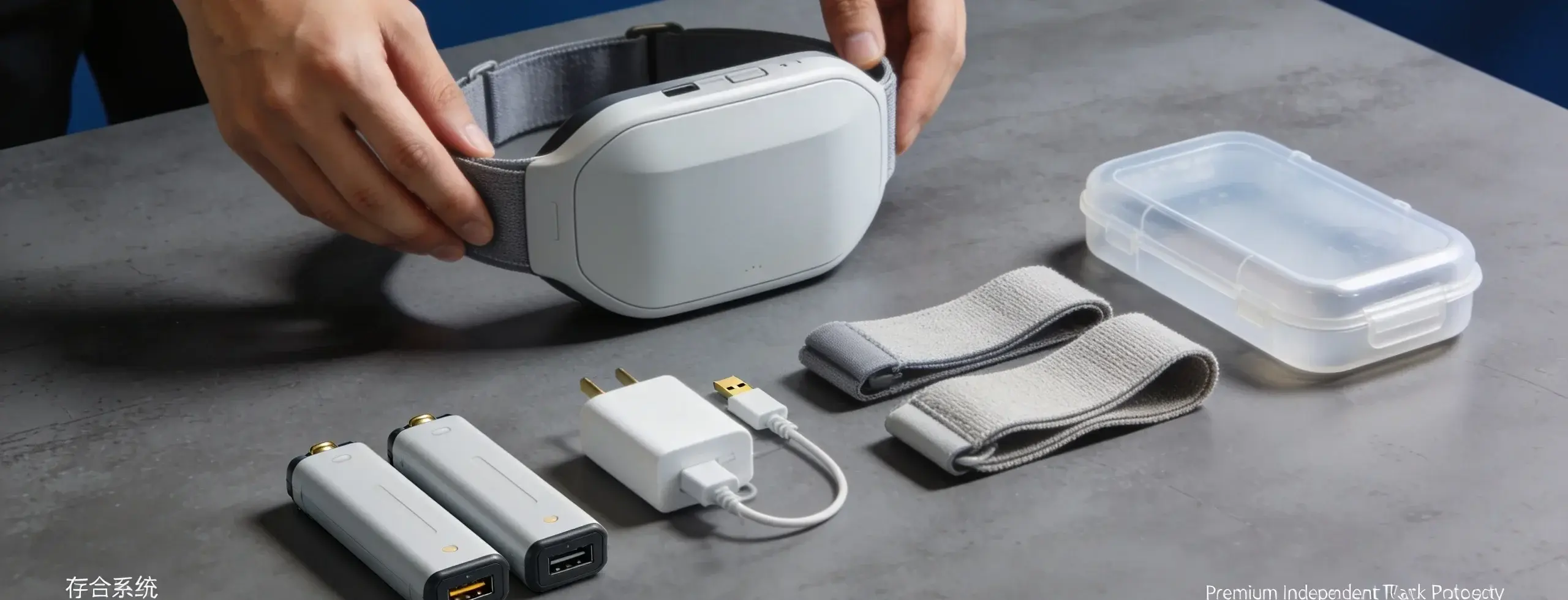
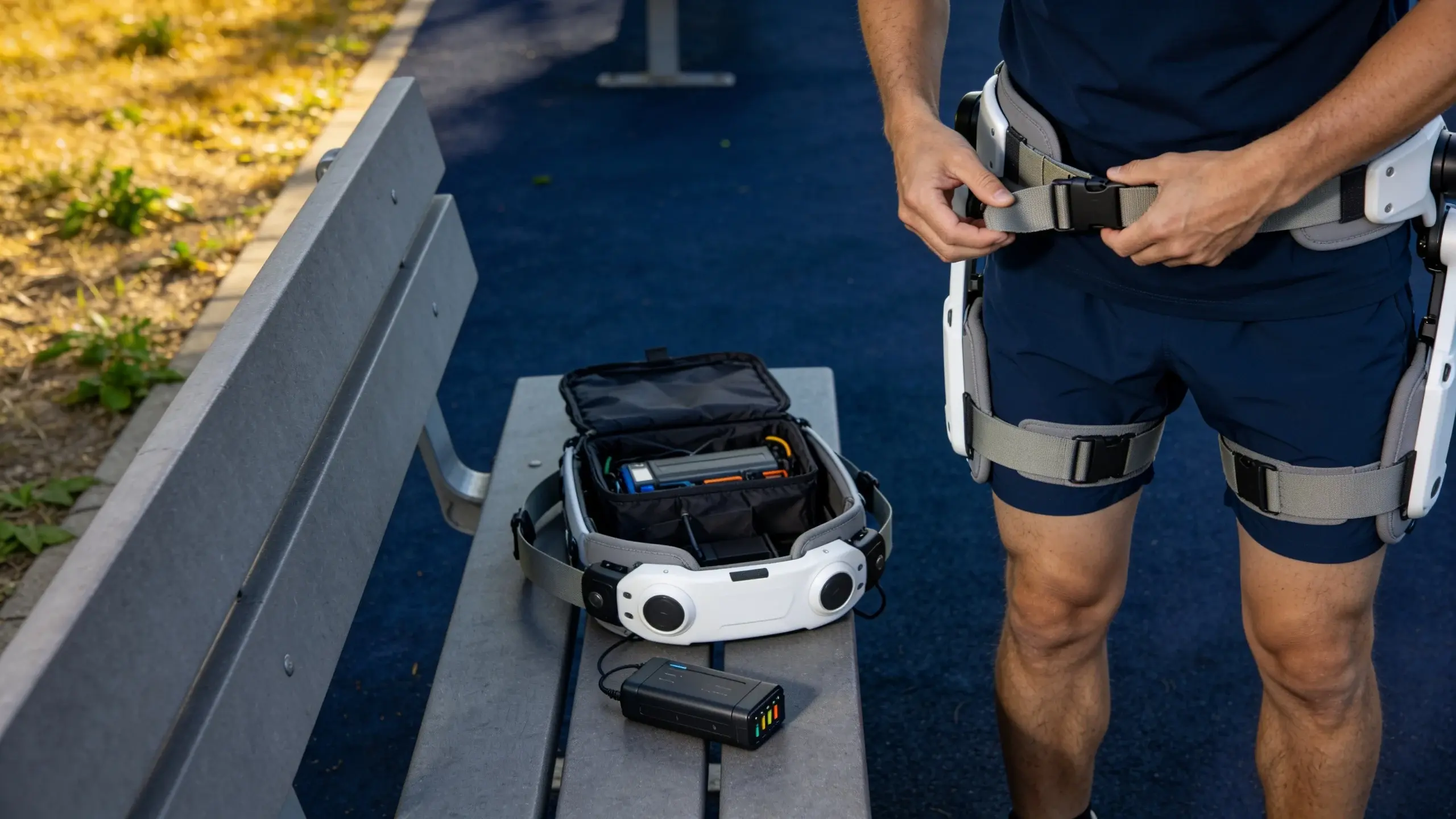
Check whether the battery is removable, whether it can charge off-device, which charger is required, how many batteries are included and whether a charging hub is optional. These details can change the value of two offers that appear to be the same product.
| Ownership question | Why it matters |
|---|---|
| Can the battery be changed without removing the device? | A nominal spare is less useful if the exchange interrupts the route or requires special tools |
| Can two batteries charge simultaneously? | Turnaround time depends on both charger output and available charging ports |
| Is a replacement battery sold in the destination market? | A removable battery does not guarantee practical replacement support |
| What happens at low charge or shutdown? | The user needs to understand drag, resistance, warnings and safe stopping behavior |
| Which warranty and return terms cover the battery? | Battery terms can differ from the frame or electronic system |
How ExoRank plans a usable range comparison
The starting point is the current manufacturer-rated figure, clearly labelled. Independent field observations are then stored separately with route, terrain, mode, user context and battery configuration. A single observation can reveal a question or boundary, but it does not replace a controlled category-wide test. When conditions are missing, the result remains qualitative.
- Use the latest exact-model source, not a family headline or an older generation.
- Keep the included battery bundle beside the advertised distance.
- Record whether a field observation began at full charge and how charge was measured.
- Describe elevation, surface, pace, assistance setting, stops and ambient conditions.
- Avoid extrapolating a short route linearly to the full battery unless the evidence supports it.
- Plan with a reserve and an exit option instead of targeting the advertised maximum.
Travel requires a separate check
The FAA requires spare lithium batteries to remain in carry-on baggage and applies watt-hour limits and carrier-approval rules. Confirm the exact battery marking and contact the airline before travel; do not infer eligibility from device size.
Travel eligibility also does not establish destination support. Before flying, verify regional charging compatibility, the manufacturer's transport instructions, safe terminal protection, storage state of charge and whether replacement parts or service are available at the destination.
Sources
Key facts
- Distance and runtime are not interchangeable without speed and conditions.
- A product-family range claim may not apply to every model or battery bundle.
- Spare-battery support and off-device charging can matter more than a maximum range number.
- Airline rules depend on battery watt-hours, installation and carrier policy.
Frequently asked questions
How long does an exoskeleton battery last?
There is no category-wide number. Use the exact model, battery, mode and conditions, and keep rated claims separate from independent observations.
Can I carry an exoskeleton battery on a plane?
It depends on watt-hours, whether the battery is installed or spare, airline approval and applicable rules. Check the battery label, FAA guidance and the carrier before travel.
Is a second battery always included?
No. Included equipment can differ by model, region and promotion. Verify the current offer rather than relying on a review of another configuration.