
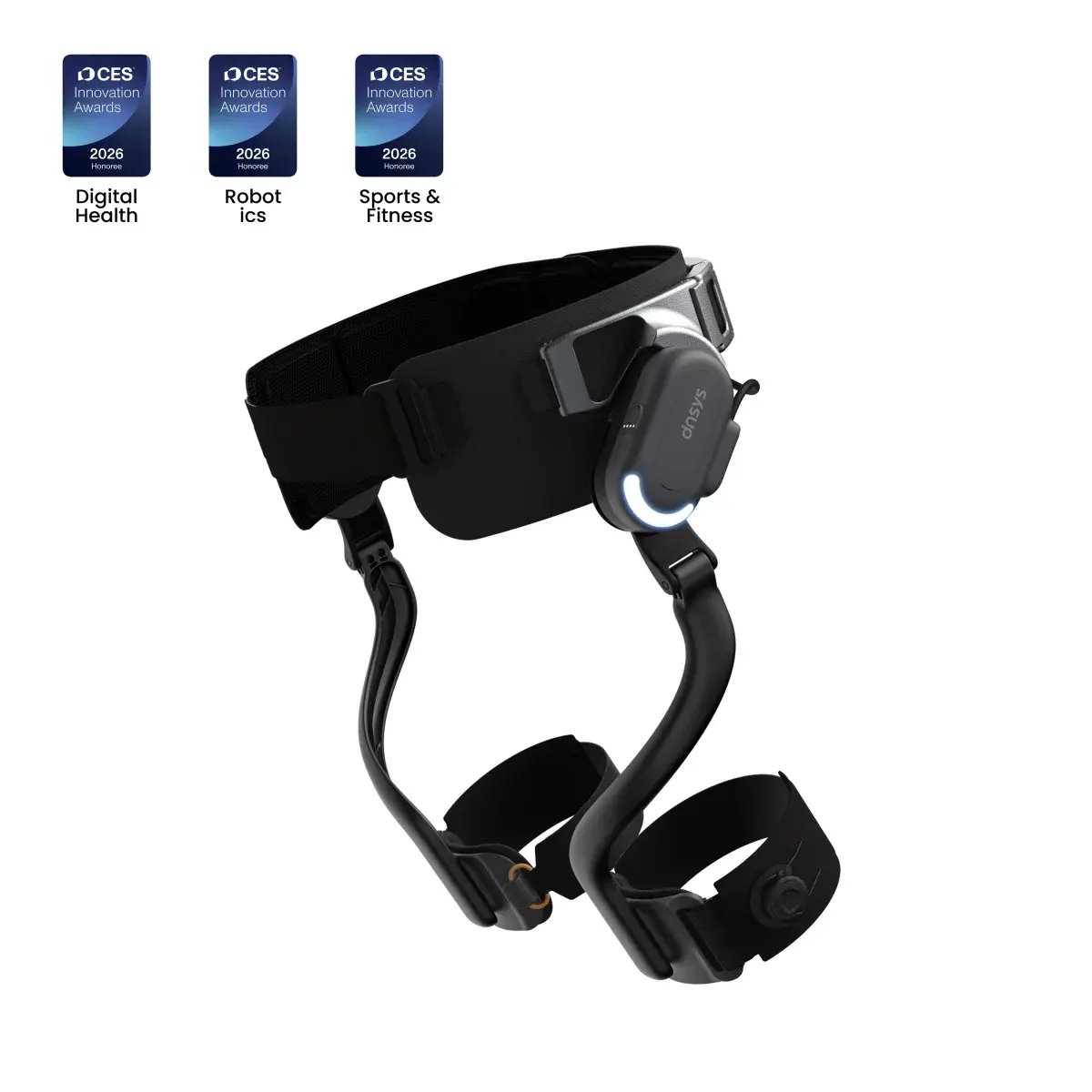
DNSYS X1 configuration
X1 Lite
- Published range
- 15 km
- Included batteries
- 1
- Peak power
- 500 W
- Mechanical-parts weight
- 1.8 kg
- Listed mechanical-parts materials
- Aluminum alloy and fiberglass mechanical parts
ExoRank product analysis
 By Avery Brooks · Last reviewed
 Designed for walking, hiking, daily mobility for independently ambulatory adults. Our analysis covers intended use, fit, power, range, portability, market availability and ownership considerations, with specifications checked against the current source record.
In short
Lowest verified price in initial consumer catalog Direct purchase Explicit non-medical safety language
| Market segment | consumer outdoor |
|---|---|
| Actuation | active electric |
| Assisted area | hip |
| Commercial status | in stock |
| Price snapshot | $689 · DNSYS USD storefront |
| Device weight | 1.8 kg (mechanical parts) |
| Peak power | 500 W — manufacturer specification |
| Advertised range | 15 km — manufacturer specification |
| Ingress protection | IP54 |
| Operating temperature | Not verified |
| Markets | US, EU, selected international markets |
| Evidence confidence | high |
The useful question is not whether DNSYS X1 Lite has the largest headline specification. It is whether its assistance architecture, fit envelope, endurance and ownership pathway match the job the buyer expects it to do. For this exact model, the strongest documented signals are:
Power, range, runtime and assistance figures are useful for identifying a product's intended capability, but they are not directly comparable unless the test conditions, assistance level, terrain and weight basis are the same. The current record attributes the following claims to DNSYS:
These are the questions that can materially change the buying decision. They remain visible until a sufficiently specific source resolves them for this exact model and configuration.
A powered wearable changes how force is applied around the hips, legs or torso. Fit, balance, independent mobility and the manufacturer's operating limits therefore matter more than a single power number.
Buying and deployment context
The documented intended-use record covers walking, hiking, daily mobility for independently ambulatory adults. That scope should guide comparisons: a product designed for consumer outdoor use should not be treated as interchangeable with a device from another evidence or regulatory class.
Hip assistance; manufacturer markets personalized motion support DNSYS publishes an advertised range of 15 km with 1 battery included. Real endurance can change with terrain, speed, temperature, user mass, assistance mode and stop-start behavior, so the number is best used as a configuration reference rather than a guaranteed trip distance.
Consumer/outdoor product; no FDA medical clearance claimed. Consumer/outdoor product; no medical-device status claimed. Do not make rehabilitation, treatment or disease claims.
Decision checklist
Use the checklist with the exact configuration sold in your market. Product-family pages can combine generations, materials or battery bundles, while a valid decision depends on the model, accessories and terms that will actually be delivered. Ask for a written list of included batteries, chargers, straps, tools and required software, plus the maintenance and inspection schedule. That record makes both the initial price and the long-term ownership burden easier to compare and exposes missing equipment before purchase. Also confirm who performs setup, training or fitting, whether remote support is available in your time zone, and which parts the owner can replace. These operational details are particularly important for products sold through quotation, clinical procurement or employer-led deployment rather than a standard consumer checkout.
Check the official body measurements and adjustment range. A technically capable device is the wrong choice if the load path or straps do not fit correctly.
This model assists the hip. Confirm that this is the movement pattern you need rather than choosing on peak power alone.
The documented mechanical parts figure is 1.8 kg. Compare only with products using the same weight basis.
Treat the 15 km claim as an upper planning reference and leave margin for terrain, mode and temperature.
Confirm warranty coverage, return window, regional support, spare batteries, app requirements and firmware policy in the destination market.
Exact-model decision profile
X1 Lite is the lowest-priced model in the current DNSYS X1 table. It retains the one-battery 15 km published range but uses a 500 W headline, fiberglass in the listed mechanical-parts materials and a 1.8 kg mechanical-parts weight. Carbon moves to the 900 W and carbon-fiber specification at the same listed distance.
The $689 entry price is the main differentiator, but the 1.8 kg figure is not a complete wearing-weight measurement and should not be placed directly beside Hypershell's wearing-weight figures. Before buying, confirm the total worn setup, current return and warranty terms, regional service and whether the lower published output changes the intended route.
Original exact-model map
X1 Lite, Carbon and Carbon Pro belong to the same hip-assist family, but each has a different technical record. Pair the battery count with the published range. Compare peak power, mechanical-parts weight and listed materials independently.
DNSYS X1 configuration
DNSYS X1 configuration
DNSYS X1 configuration
Product questions
DNSYS X1 Lite is documented for walking, hiking, daily mobility for independently ambulatory adults and applies active electric assistance around the hip. It belongs to the consumer outdoor category, so its claims and buying criteria should be evaluated within that segment.
The recorded price snapshot is $689 for the DNSYS USD storefront, checked 2026-08-10. Promotions, tax, shipping, selected configuration and regional pricing can change the amount.
DNSYS publishes 15 km of advertised range with 1 battery included. Actual endurance can vary with mode, terrain, speed, temperature and user load.
Consumer/outdoor product; no FDA medical clearance claimed. Consumer/outdoor product; no medical-device status claimed. Do not make rehabilitation, treatment or disease claims.
Last verified 2026-09-02. Price, stock, firmware, policies, and regulatory records can change.